
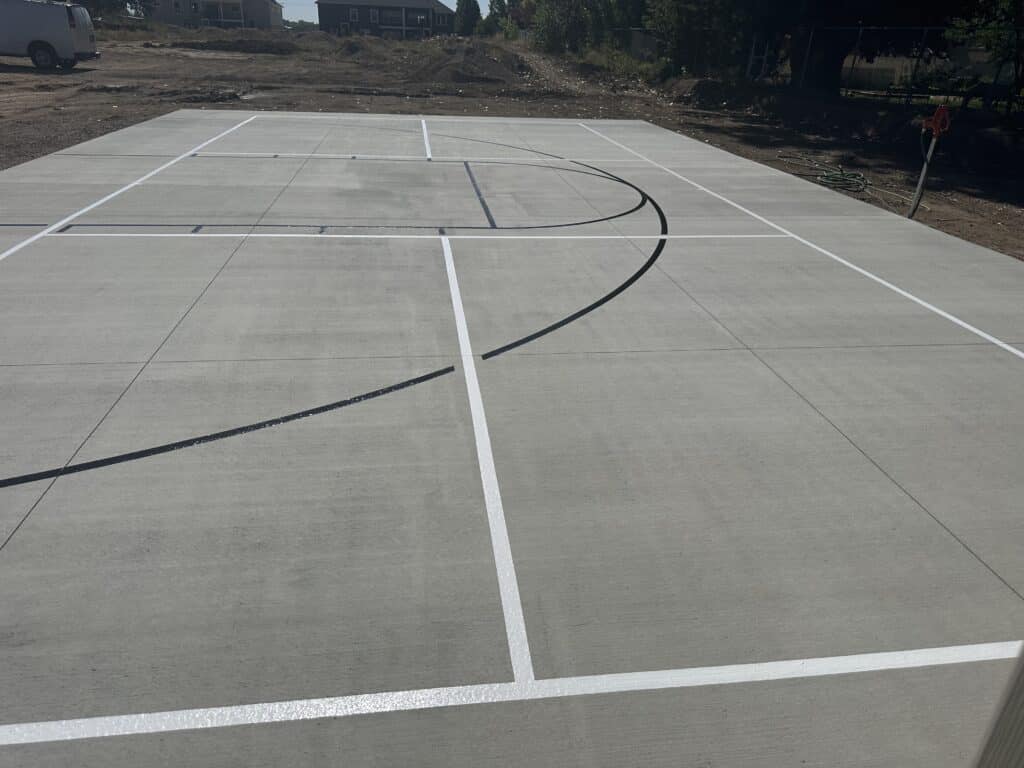
If you have an outdoor court, it will need to be resurfaced at some point. Making the decision of whether to do it yourself or hire a professional court resurfacing company involves a lot of factors to consider. No matter what options you’re keeping in mind, it’s important to consider all the pros and cons of both options.
What Is Court Resurfacing?
Resurfacing a court is more than just giving it a fresh coat of paint. It’s a multi-step process that is supposed to help restore performance, safety, and appearance. Inevitably, courts develop cracks, surface wear, and fading because of the elements and regular use. By resurfacing your court, you can address these issues by repairing damage, smoothing the surface, and applying professional coatings.
The process of resurfacing includes deep cleaning, crack and surface repair, and the application of coating systems that restore a court’s traction and durability. Though this seems like a task that could become a DIY weekend project, if not done correctly, it can affect everything from the safety of your court to how it looks. Professional court resurfacing, although it may come at a greater cost, is done correctly with professional tools and knowledge.
DIY vs. Professional Court Resurfacing

There are a lot of factors to consider when going with the DIY court resurfacing option. For many, the main factor in going with the DIY option is cost. Because you aren’t paying for labor, the upfront cost of DIY court resurfacing is lower. However, many don’t understand what the process of DIY court resurfacing includes. It can be a very time-consuming, difficult process for one to do themselves. If surfaces are uneven, if lines aren’t straight, or if you use low-quality materials all of the time you spent resurfacing could result in hiring a professional anyway.
Professional court resurfacing can give you back your time and some peace of mind. Although it comes at an extra cost, it can be worth it. When choosing the professional court resurfacing route, you get the resurfacing process done efficiently, correctly, and consistently.
How the Process Works
Whether or not you choose the DIY or professional court resurfacing option, the process will look the same.
- Deep cleaning the surface: This step is vital to getting rid of dirt, debris, and other loose or flaking material to ensure proper coating adhesion.
- Crack repair and patching: This step includes routing and filling cracks, repairing low or damaged areas, and keeping the surface even.
- Surface leveling: If the court has uneven areas, surface leveling may be needed to fill low spots and create a uniform playing surface.
- Acrylic resurfacing layers: This is the main step, where multiple layers of acrylic resurfacer are applied. This part takes the longest because each layer must dry before the next is added.
- Color coating: Once the base is set, color coats are applied for aesthetics and UV protection.
- Line striping: The final step of the process is a meticulous and precise measurement of court markings and the application of durable striping paint.
When following these steps, professional court resurfacing usually takes one to three days to complete, plus the twenty-four to seventy-two hours of curing time. When following these steps yourself, the process can take significantly longer. Typically around three to seven plus days of work that is usually spread over two or more weekends, depending on conditions and what you know.
Common DIY Mistakes
When making the decision to do a DIY court resurfacing, there are several common mistakes that get made.
These mistakes include:
Skipping proper surface preparation – When the surface isn’t properly cleaned before beginning the resurfacing process, the new surface may peel, bubble, or wear down very quickly.
Improper crack repair – Only fixing surface-level damage makes those cracks come back quicker, and sometimes worse than they were before.
Uneven coating application – If the application of the coating is inconsistent, it can cause streaks, rough texture, and uneven ball bounce. This not only affects the look of the court, but it also affects play.
Using the wrong materials – If you use low-quality or incorrect products, it can lead to fading, poor traction, and reduced durability over time.
Ignoring timing and weather conditions – Applying coating in the wrong temperatures or rushing drying times can result in your court having a shorter lifespan and make the work harder for you.
DIY vs. Professional: What’s Better?
When it comes down to it, professional court resurfacing is the better option. Professional court resurfacing can save you time, and it can save you money. Though the upfront cost of DIY court resurfacing seems to be cheaper, it’s likely that you’ll inevitably have to hire a professional to resurface your court anyway to fix common DIY mistakes. As one of the top court surfacing companies in Utah, we are dedicated to restoring your court to its original glory without all the hassle you would face doing it yourself. So, save yourself some time, money, and give yourself some peace of mind by getting professional court resurfacing services with Utah Court Surfacing. Contact us today for a free estimate.
Follow Us